

Which Toys and Activities Keep Toddlers Busy Without Any Screen Time?
IntroductionThe exploration of solo play in children is a fascinating area th...

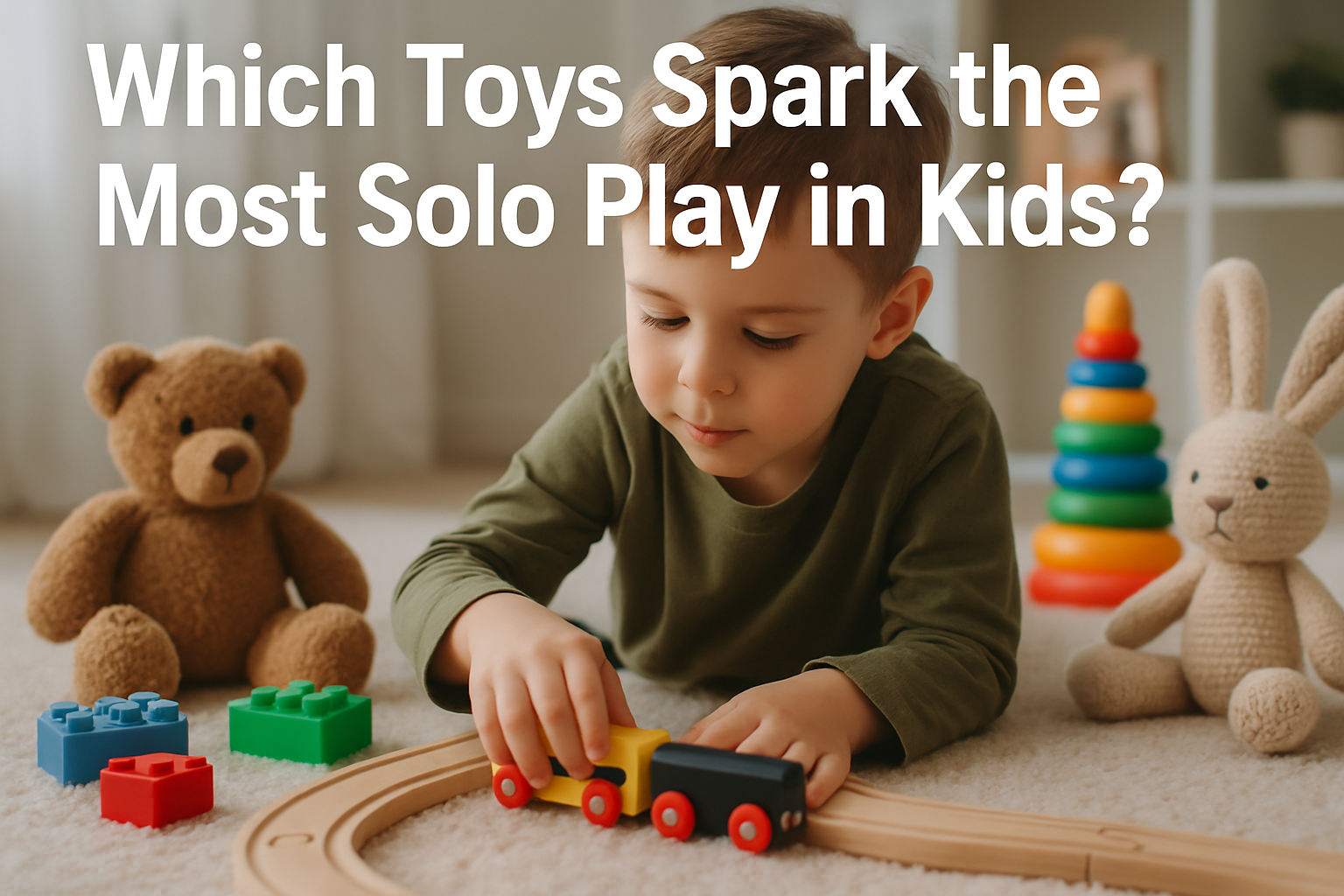

The exploration of solo play in children is a fascinating area that warrants significant attention. As childhood development increasingly recognizes the critical role of independent activities, understanding which toys can effectively promote solo play becomes essential. This article aims to bridge the gap by delving into the types of toys that not only capture children's imaginations but also encourage their deep engagement in solitary play. By identifying toys that foster independence, we can better appreciate their impact on child development.
To begin with, this article will explore the kinds of toys that inspire children to engage in solo play. Understanding that certain toys, by their very design, can trigger imagination and creativity is vital. From building blocks to art supplies, we will discuss various categories of toys and highlight the unique benefits each can offer in nurturing a child's ability to play independently. In addition, we will outline the criteria used to evaluate the effectiveness of these toys in fostering solo engagement. This includes examining the toy's capacity to promote creativity, stimulate cognitive skills, and adapt to a child's developmental needs.
The significance of solo play extends beyond mere entertainment. Engaging in solitary activities allows children to develop essential life skills while having fun. It is during these moments of independent play that children learn to navigate challenges, think critically, and express themselves creatively. As we explore the multifaceted benefits of solo play throughout this article, we will also underscore how this independence contributes to emotional resilience and problem-solving abilities. In harnessing the right toys, we can support children's growth in not just cognitive areas, but also social and emotional domains, equipping them for a well-rounded future.
Building and construction toys serve as essential tools for enhancing creativity and developing spatial skills among children. These sets empower young minds to visualize their creations before executing them, allowing for a deeper understanding of structure and balance. As children assemble pieces, they engage in a unique blend of artistry and engineering, fostering both imagination and practicality. Creating complex shapes and structures stimulates cognitive engagement, pushing children to think critically about how each component interacts with others.
Moreover, construction toys encourage independent problem-solving. When children face challenges while building, they learn to devise solutions on their own, which reinforces their confidence and autonomy. This hands-on experience helps them to cultivate patience, as they may need several attempts to reach their desired outcome. As they experiment with different designs and deconstruct their builds to try again, they gain resilience and adaptability, two crucial traits that transfer to other areas of their lives.
Ultimately, the benefits of building sets extend beyond play. By engaging in solo construction activities, children enhance their fine motor skills, essential for everyday tasks. As they manipulate smaller components, they develop hand-eye coordination, control, and dexterity. These toys provide a fertile ground for creativity, setting the stage for the development of future skills in design, architecture, and the arts.
Art materials like paints, markers, and clay can significantly enhance self-expression and develop fine motor skills in children. Through engaging in various artistic endeavors, children explore their unique creativity without the constraints of structured play. This type of engagement allows them to visualize concepts and emotions, facilitating their ability to communicate feelings effectively. Art becomes a language of its own, helping children express what they might not be able to articulate verbally.
Crafting activities also provide excellent avenues for children to engage independently. Projects such as scrapbooking, painting, and building models encourage focus and concentration. These solitary activities not only enhance problem-solving skills as they figure out the best techniques to apply but also nurture their ability to collaborate with their own thoughts and ideas. The process of creating something from scratch encourages a sense of achievement and boosts self-esteem.
Through art and craft supplies, children gain hands-on experience that enriches their learning. Fine motor skills are further refined as they cut, paste, and sculpt, laying the groundwork for future academic tasks like writing and typing. Moreover, solitary art play can lead to longer periods of concentration and deeper immersion in tasks, further promoting their ability to engage meaningfully with their interests.
Puzzles are powerful tools for enhancing cognitive skills and fostering patience among children. As children work through various puzzle challenges, they develop critical thinking skills that are vital for problem-solving in real life. Piecing together different components requires them to observe, experiment, and adapt their strategies based on the patterns they notice. This analytical approach to play enables children to grow confident in their abilities to tackle complex problems independently.
The appeal of strategy games also promotes analytical thinking during solo play. These games often require players to plan their moves and think multiple steps ahead, fostering not just strategic foresight but also an understanding of consequences. The focus and dedication needed to excel at such games build essential life skills, including attention to detail and persistence. Furthermore, when children play independently, they learn to accept setbacks gracefully, enhancing their emotional resilience and flexibility.
Puzzles and strategy games instill a sense of achievement when completed solo. The satisfaction derived from solving a challenging puzzle or winning a strategy game builds internal motivation, encouraging children to seek out and tackle new challenges. Solo play in this regard fosters a growth mindset; children come to appreciate the joy of learning through trial and error, which is vital for lifelong learning pursuits.
Toys that encourage imaginative play, such as dolls, action figures, and playsets, are invaluable for fostering storytelling and role-playing skills. These toys invite children to create elaborate narratives and scenarios, enabling them to explore various social situations and perspectives, even when playing alone. The ability to engage in imaginative play acts as a conduit for emotional development, allowing children to experiment with different roles and situations without the influence of others.
While children craft stories with their toys, they not only boost their creativity but also enhance their social skills and empathy. This type of play helps them understand relationships and emotions, even in a solo context. Through role-playing, they can practice negotiation, conflict resolution, and cooperation, all of which are vital social competencies. This engagement aids in developing their understanding of themselves and others, which manifests positively in real-world interactions.
Furthermore, imaginative play toys contribute significantly to cognitive growth. As children invent scenarios and characters, they learn to think abstractly and develop narrative skills, laying the groundwork for future literacy. This type of play activates various areas of the brain associated with language and creativity, ensuring that children have a holistic developmental experience, even while engaging in solo activities.
Science and discovery kits offer a stimulating way for children to cultivate curiosity and encourage independent exploration. These kits often provide hands-on experiments that let children delve deep into scientific concepts and principles. As they conduct experiments, children learn to ask questions, make predictions, and observe outcomes, developing a scientific mindset that will serve them well in academic pursuits.
The educational value of hands-on experiments cannot be overstated. When children work independently with science kits, they engage in experiential learning, which has been shown to enhance understanding and retention of information. Through trial and error, they become familiar with the scientific method, learning to formulate hypotheses and test their validity—skills that are foundational for future academic success and critical thinking.
Additionally, science and discovery kits can stimulate a love for learning that transcends the play environment. By encouraging exploration and fostering inquiry-based learning, these kits can spark interests that lead children to seek further knowledge in various STEM fields. Engaging with scientific concepts through play not only nurtures a sense of wonder but also prepares children for a future where the ability to think independently and solve complex problems is paramount.
Choosing the right toys for children is not merely a fun task; it plays a vital role in their developmental journey. The alignment of toys with a child’s age is essential. Toys designed for specific developmental stages can inspire creativity, promote learning, and foster independence. For instance, infants require toys that encourage sensory exploration, while toddlers benefit from items that promote motor skills and imaginative play. When children's playtime includes age-appropriate toys, they're more likely to remain engaged and can fully utilize their potential in solo play settings. This supports the theory that the right tools can significantly enhance the learning experience and the overall joy of play.
Furthermore, age-appropriate toys can prevent frustration and disengagement. For example, a toy that is too advanced might lead to boredom or confusion, while one that is too simplistic can lack engagement. In contexts where children can play alone, such toys not only support developmental milestones but also allow for individual exploration. This effective engagement is essential for fostering autonomy and self-esteem as children learn to entertain themselves. Hence, matching toys to developmental stages serves the dual purpose of enhancing play value while supporting crucial growth benchmarks.
Quality and safety are equally pivotal when it comes to the selection of toys. Ensuring that toys are made from safe materials and designed with care is fundamental to protecting children during play. Parents and caregivers must scrutinize labels for safety certifications and remain vigilant about potential hazards. High-quality toys are typically crafted to withstand wear and tear, ensuring they remain safe over time. This level of durability is particularly important as children often demonstrate vigorous play patterns, engaging deeply with their chosen toys. A well-constructed toy not only offers reassurance of safety but also promotes sustained engagement as children use it over an extended period.
Moreover, the role of quality extends beyond safety. Toys that are well-made often offer more interactive features that can capture a child's interest for longer. This ongoing engagement is vital for developmental play, as children often thrive on repetition and exploration. Toys that break easily can lead to disappointment and reduced interest, whereas those designed to endure encourage children to delve deeper into their imaginative worlds. Therefore, prioritizing both quality and safety contributes to a richer, more fulfilling play experience while mitigating risks associated with lower-quality products.
In summary, age appropriateness and quality are essential factors that influence the effectiveness of toys in childhood development. By ensuring that toys are suited to children’s developmental stages and crafted from safe, durable materials, caregivers can support not only engagement in play but also foster a thriving environment for growth and learning.
When choosing toys for children, it is essential for parents to consider their kids' individual interests and developmental needs. Each child is unique and engages differently with various types of play. Observing what captivates a child’s attention can guide parents in selecting toys that will promote independent play. For instance, children who are inclined toward creativity may benefit from open-ended toys that allow them to express their imagination, such as building blocks or art supplies. Conversely, children interested in problem-solving might thrive with puzzles or activity kits designed to challenge their thinking in a fun way.
Evaluating the potential of toys to foster independent play involves looking for features that encourage self-guided exploration. Parents should prioritize toys that are safe, durable, and age-appropriate, ensuring they engage children in ways that can sustain their interest. Parents can look for toys that come with various levels of complexity; this allows a child to grow with the toy, continually finding new ways to play with it as their skills develop. Additionally, toys that promote fine and gross motor skills can enhance a child's physical development while they engage in solo play, giving them the dual benefit of fun and skill-building.
Lastly, it is advisable for parents to avoid toys that are overly prescriptive in how they should be used. Toys that limit a child's creativity or require adult supervision for play are less likely to encourage independent exploration. Instead, providing children with versatile toys can spark their imagination, leading to spontaneous play experiences. By thoughtfully selecting toys that align with children’s interests and encourage exploration, parents can foster a sense of autonomy and creativity in their playtime routines.
Establishing a designated play space is integral in promoting solo play among children. A specific area for play not only defines where children can engage in their activities but also signals to them that it's time for creative exploration. Such a space should be inviting and tailored to the child’s preferences, allowing them to feel comfortable and free to express themselves. Moreover, having a dedicated area helps to minimize disruptions and distractions that may interfere with the child’s ability to focus and immerse themselves fully in their play.
Minimizing distractions further enhances the efficacy of the play environment. This entails reducing background noise, limiting access to electronic devices, and ensuring that the space is organized and clutter-free. A calm environment helps children concentrate on their activities, enabling deeper engagement. Parents might consider including elements like soft lighting, comfortable seating, or sensory-rich materials that can make the play space even more conducive to focused, independent play. Additionally, incorporating a variety of materials and toys within the space encourages exploration and invites creative thinking, which are fundamental benefits of solo play.
Furthermore, fostering autonomy is essential for children's growth. When children feel in control of their play environment, they are more likely to take initiative and explore their interests independently. This allows them to hone critical skills such as decision-making, problem-solving, and resilience. Parents can support this process by facilitating an environment that encourages children to make choices about how and what to play, thus enhancing their confidence and sense of agency. By prioritizing the creation of a supportive play environment, parents can significantly enhance their child's ability to engage in independent play.
Throughout this exploration, we have identified various types of toys that significantly encourage solo play among children. These include open-ended toys, creative materials like sets for building and crafting, and puzzles that stimulate cognitive abilities. Each of these categories supports a child's independence, allowing them to engage in imaginative play without adult intervention. These toys serve as catalysts for creativity and problem-solving, enabling children to explore their interests and develop their skills at their own pace.
Additionally, the benefits of solo play extend far beyond mere entertainment. Engaging in independent play fosters essential life skills such as autonomy, self-regulation, and critical thinking. When children play alone, they learn how to manage their time, make decisions, and navigate challenges independently. This aspect of play is vital for their overall development, as it cultivates resilience and adaptability, preparing them for social interactions and future academic endeavors. Furthermore, solo play provides children with a sense of accomplishment, boosting their confidence in their abilities.
In light of these findings, it is essential to support and promote independent play among children. Parents and caregivers can create an environment conducive to solo play by providing a variety of accessible toys and materials that inspire creativity. Encouragement to explore and engage in play without structured oversight fosters a sense of freedom and discovery. As we have seen, the importance of balancing guided play with opportunities for solo exploration cannot be overstated. Supporting independent play is not only beneficial for child development but is also instrumental in nurturing well-rounded, self-sufficient individuals.


IntroductionThe exploration of solo play in children is a fascinating area th...

IntroductionThe exploration of solo play in children is a fascinating area th...